Best Barefoot Shoes for Ski Resorts (2025): Give Your Feet a Break
Last updated: January 22, 2026
Here’s a question nobody asks often enough: what barefoot shoes should you wear at a ski resort when you’re not skiing?
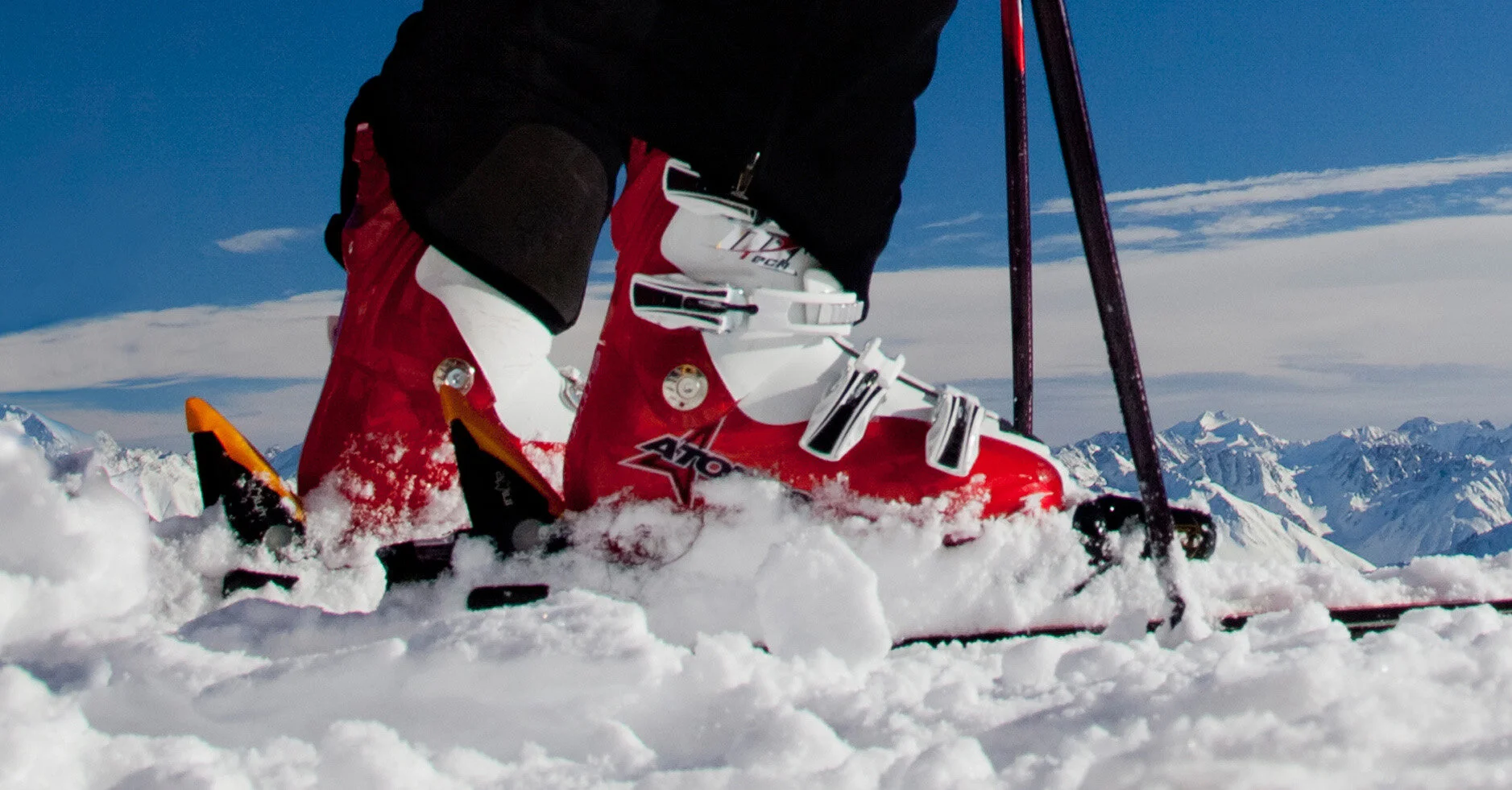
It sounds counterintuitive. After all, ski boots are basically the antithesis of barefoot philosophy—rigid plastic shells squeezing your feet into submission for hours at a time. But that’s exactly why this matters. After a day locked in ski boots, your feet are screaming for freedom. They need to spread, flex, and breathe.
Whether you’re walking from your chalet to dinner, grabbing après-ski drinks, or just relaxing in the lodge, you need footwear that’s warm enough for alpine conditions, grippy enough for icy paths, yet comfortable enough to let your feet recover from ski boot torture.
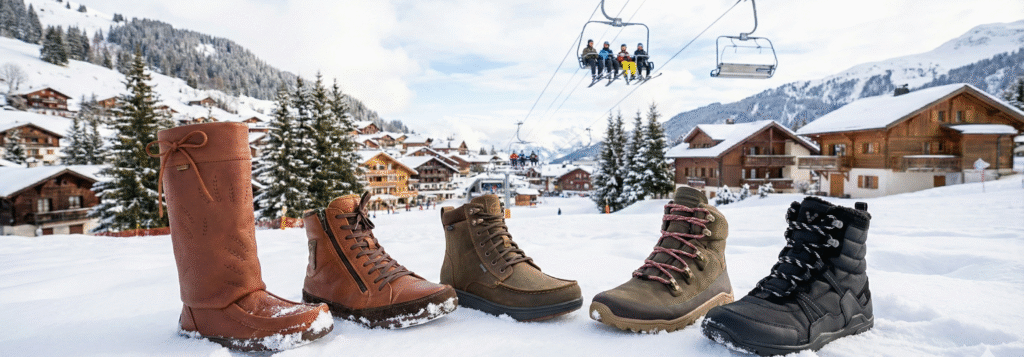
This guide covers the five best barefoot options specifically designed for ski resort environments—where warmth, traction on snow and ice, and genuine foot relief are non-negotiable.
Quick Comparison
| Shoe | Price | Warmth Rating | Ice Grip | Best For |
|---|---|---|---|---|
| Xero Alpine | £160 | -32°C | Excellent | All-around resort wear |
| Vivobarefoot Tracker Winter | £200 | -18°C | Excellent | Premium performance |
| Lems Boulder Boot Summit | $195 | -15°C | Very Good | Style + warmth |
| Magical Shoes Alaskan | £150 | -10°C | Very Good | Ultra-flexible option |
| Manitobah Waterproof Mukluk | $280 | -25°C | Excellent | Extreme cold |
Why Barefoot Shoes at a Ski Resort?
The ski boot problem: Traditional ski boots compress your toes, lock your ankles, and eliminate natural foot movement for 4-8 hours daily. This causes:
- Restricted blood flow
- Toe numbness and cramping
- Weakened foot muscles
- Joint stress from unnatural positioning
The barefoot solution: After skiing, your feet need the opposite—space to splay, freedom to flex, and room to recover. A good barefoot boot for ski resorts gives your feet a proper reset between sessions.
Added bonus: Many skiers don’t realize that strengthening feet through barefoot footwear can actually improve skiing performance by enhancing proprioception and ankle stability.
The 5 Best Barefoot Shoes for Ski Resorts
1. Xero Shoes Alpine Snow Boot – £160
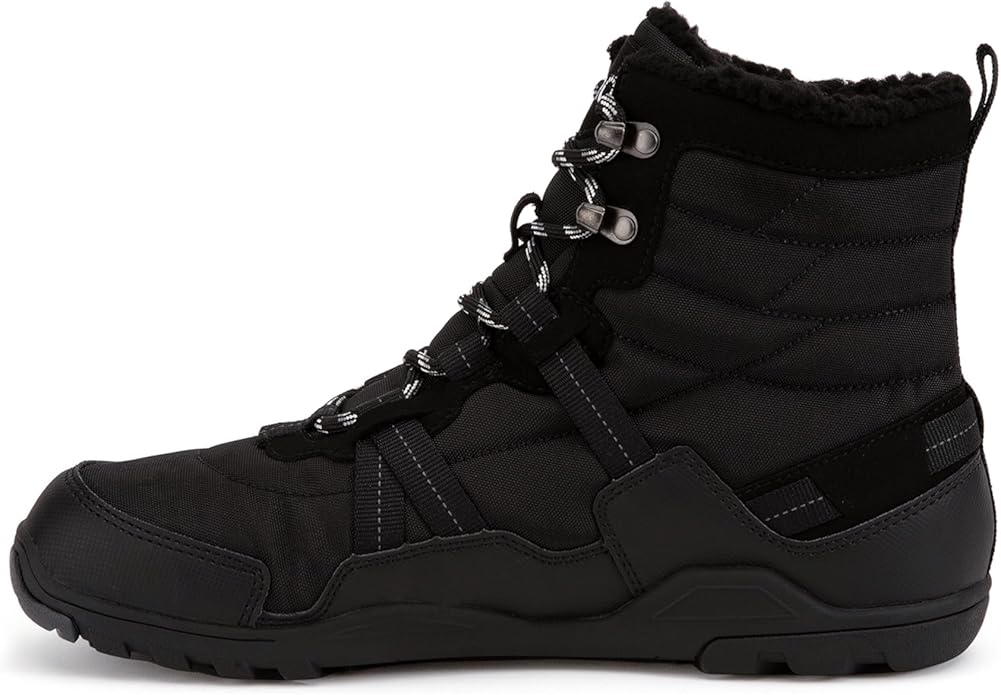
The all-around champion for resort life.
The Xero Alpine is purpose-built for serious winter conditions while maintaining true barefoot principles. With 200g insulation and a fleece lining, these boots are rated to -32°C—genuinely cold enough for the coldest resort days.
What Makes It Great for Ski Resorts:
Temperature rated to -32°C: This is colder than you’ll experience at most ski resorts. Even on brutally cold days in places like Whistler or the Alps, your feet stay warm.
Tall shaft keeps snow out: The boot rises high enough that walking through powder or slushy parking lots doesn’t result in snow down your boot—critical when you’re constantly moving between lodge and lift.
Surprisingly flexible for a snow boot: Despite the insulation and waterproofing, the sole maintains enough flex to feel the ground. It’s not as minimal as summer barefoot shoes, but significantly more flexible than traditional snow boots.
Lightweight at 14.9oz (men’s 9): Carrying this kind of warmth without the traditional winter boot weight means less fatigue when you’re walking around resort villages.
Potential Drawbacks:
Stiffest option on this list: The trade-off for warmth and waterproofing is reduced flexibility compared to other barefoot options. Still far more flexible than conventional boots, but barefoot purists will notice.
Runs true to size but bulky: The insulation takes up internal space. If you plan to wear thick ski socks, consider sizing up half a size.
Best For:
- Walking between chalets and lifts
- Après-ski in cold resort towns
- Snowshoeing or winter hiking
- Anyone prioritizing warmth over maximum ground feel
Verdict: If you need one boot for all ski resort activities off the slopes, this is it. The combination of genuine cold-weather performance and barefoot toe freedom makes it ideal for the varied demands of resort life.
2. Vivobarefoot Tracker Winter – £200
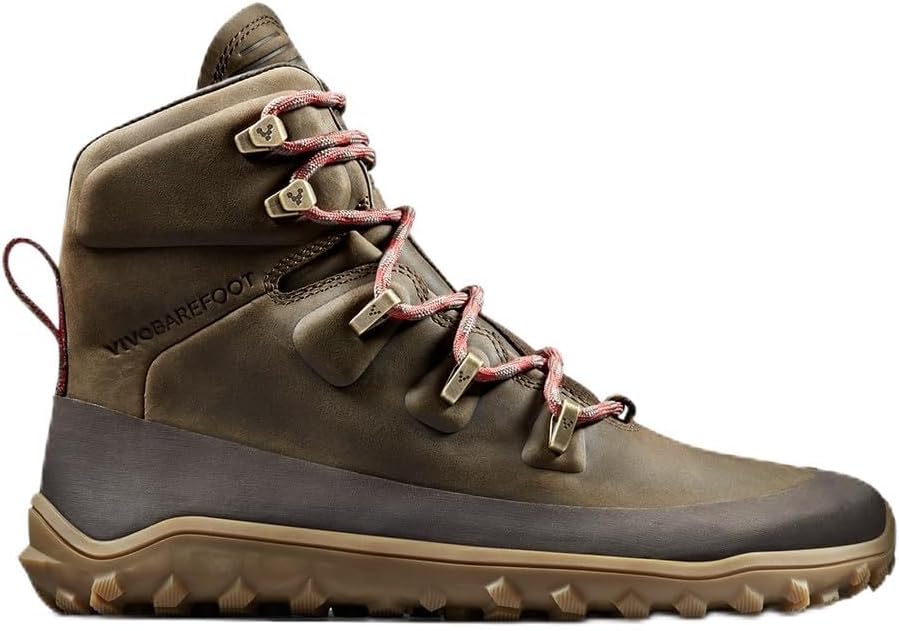
Premium protection for the discerning barefoot enthusiast.
Vivobarefoot’s Tracker Winter represents the high-end approach to barefoot winter boots. These are expedition-grade boots adapted for everyday resort wear, featuring full leather uppers, complete waterproofing, and insulation rated to -18°C.
What Makes It Great for Ski Resorts:
Rugged 5mm lugs on the outsole: The aggressive tread pattern with Vivobarefoot’s hex-flex design provides exceptional grip on both packed snow and icy walkways. In testing, these perform confidently on the kind of treacherous icy paths common around ski lodges and parking areas.
Genuine leather construction: The quality is immediately apparent. Full-grain leather uppers with sealed seams create a boot that looks appropriate anywhere—from mountain hut to resort restaurant.
Folds into a ball despite robust build: Even with all the winterization, these retain surprising flexibility. The sole can flex enough to roll the boot into a compact shape, making them excellent for packing in luggage.
Wide toe box with proper volume: Unlike many winter boots that compromise toe space for insulation, the Tracker Winter maintains Vivobarefoot’s signature anatomical shape. Your toes can splay naturally even with thermal socks.
Potential Drawbacks:
Stiff when new: Multiple users report a break-in period where the boots feel rigid. Plan to wear them around town before your ski trip.
Premium price point: At £200, these are the most expensive option on this list. The quality justifies the cost, but budget-conscious buyers have other solid options.
Best For:
- Multi-week ski trips where durability matters
- Resort-to-backcountry crossover use
- Those wanting boots that work in ski towns and back home
- Anyone prioritizing maximum quality and longevity
Verdict: These are an investment piece. If you ski regularly, live in cold climates, or want boots that transition seamlessly from resort to city, the Tracker Winter delivers premium performance worth the price.
3. Lems Boulder Boot Summit – £195
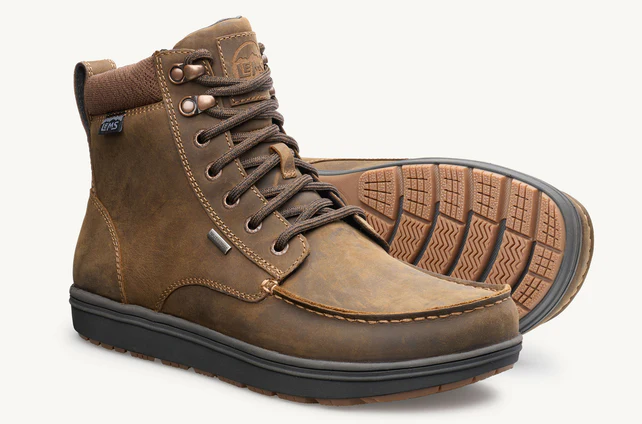
Where style meets substance for the fashion-conscious skier.
Lems occupies an interesting middle ground in the barefoot world—not quite as minimal as Vivobarefoot or Xero, but with a more refined aesthetic and still genuinely wide and flexible. The Boulder Boot Summit takes this philosophy into serious winter territory.
What Makes It Great for Ski Resorts:
Gorgeous full-grain oiled leather: These don’t scream “technical outdoor gear.” The aesthetic works equally well at a mountain restaurant or walking through resort villages. Many skiers want boots that look intentional, not purely functional.
Grippy 4mm lugs handle varied terrain: The outsole balances traction for icy paths with enough flexibility for natural movement. Not as aggressive as the Tracker Winter, but more than adequate for resort environments.
Gusseted tongue prevents snow entry: This seemingly small detail becomes crucial when you’re walking through slushy resort parking lots or cutting across snowy paths. Water and snow stay out.
Thermal rating to -15°C with good insulation: Warm enough for most resort days, though not extreme cold. The insulation provides comfort without excessive bulk.
Potential Drawbacks:
Thicker sole reduces ground feel: At 16mm stack height, this is the least “barefoot” option on the list. You’re trading some proprioception for warmth and cushioning. Great for recovery days; less ideal for maintaining maximum foot engagement.
Not fully zero-drop: Lems boots have a slight heel elevation. For strict barefoot adherents, this may be a dealbreaker. For those transitioning or wanting foot-shaped comfort without extreme minimalism, it’s perfect.
Best For:
- Après-ski socializing and dining
- Resort town walking and shopping
- Transitioning from traditional winter boots
- Anyone wanting “sneaky barefoot”—looks conventional, feels spacious
Verdict: If you value aesthetics alongside function and don’t need extreme minimalism, the Boulder Boot Summit is the most versatile option. It’s the boot you can wear from ski resort to city without changing footwear.
4. Magical Shoes Alaskan – £150
The ultra-flexible option for serious barefoot enthusiasts.
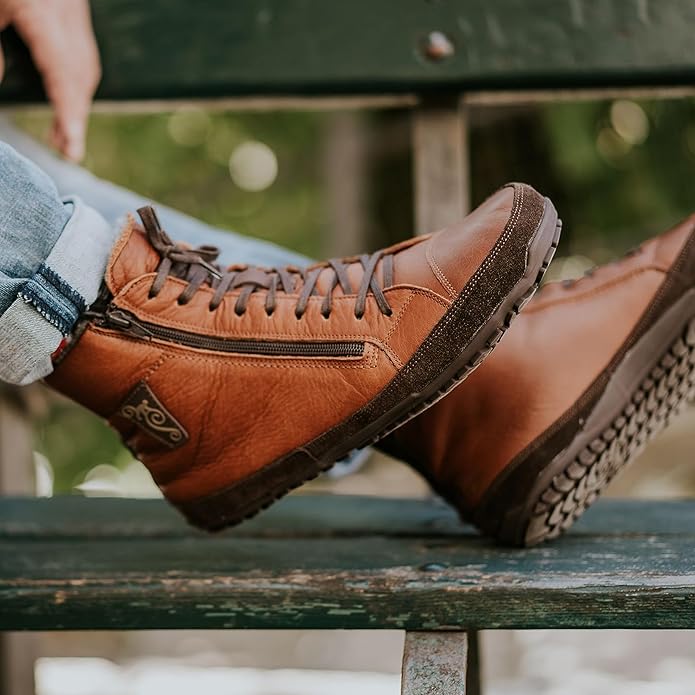
For those who refuse to compromise on flexibility even in winter conditions, Magical Shoes delivers. The Alaskan is shockingly lightweight and flexible for an insulated winter boot, maintaining true barefoot principles while adding weatherproofing.
What Makes It Great for Ski Resorts:
Surprisingly warm despite minimal bulk: Wool lining and a hydrophobic membrane create an effective thermal barrier without the weight and stiffness of traditional insulation. In practice, they’re comfortable down to -10°C with appropriate socks.
Side zipper for easy on/off: After fumbling with ski boot buckles all day, the last thing you want is complicated lacing. The zipper makes transitions quick—critical when you’re constantly in and out of lodges.
Extremely lightweight for winter boots: You almost forget you’re wearing them. This is a huge advantage for resort walking where you might cover several kilometers daily navigating villages and lift areas.
Grippy outsole performs well on snow: The aggressive tread handles packed snow confidently. Ice requires more caution, but for typical resort surfaces, traction is more than adequate.
Potential Drawbacks:
Less warm than others for stationary periods: The minimal insulation means if you’re standing around (chairlift lines, waiting for friends), your feet may get cold. These excel when you’re moving.
Sizing runs small: Nearly universal feedback suggests sizing up. The thick wool lining takes internal space, and you’ll likely want room for thermal socks anyway.
Best For:
- Active resort exploration and walking
- Those prioritizing flexibility over maximum warmth
- Barefoot purists who won’t compromise principles
- Packing light for ski trips (these compress well)
Verdict: If your priority is maintaining barefoot feel even in winter, these deliver. They’re best for milder resort days or when you’re constantly active. Not ideal for extreme cold or prolonged standing.
5. Manitobah Waterproof Mukluk – $280
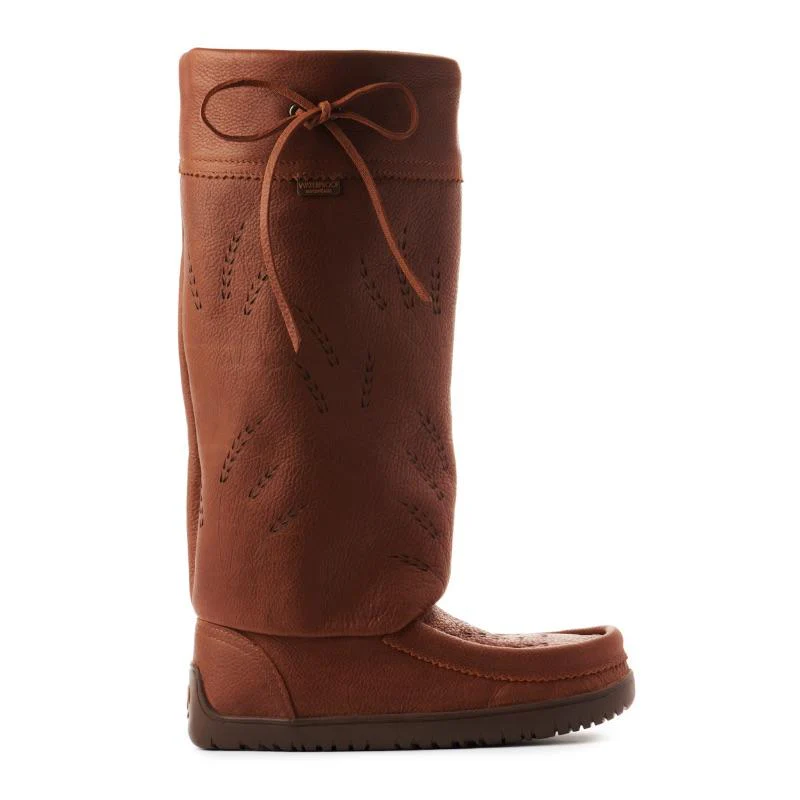
Authentic cold-weather design meets barefoot principles.
Something a bit different to finish. Manitobah creates Indigenous-designed mukluks built for Canadian winters—we’re talking the real deal for serious cold. While not all their designs fit strict barefoot criteria, their waterproof models with Vibram soles bring traditional warmth to a zero-drop platform.
What Makes It Great for Ski Resorts:
Rated to -25°F (-32°C) with sheepskin shearling: This is extreme-cold protection. If you ski in places like Whistler, Lake Louise, or the Rockies during deep winter, this level of insulation is genuinely necessary and appreciated.
Vibram sole provides zero-drop platform: Despite the traditional mukluk design, the sole maintains barefoot principles with no heel elevation and good flexibility for this level of protection.
Authentic craftsmanship with cultural heritage: These aren’t mass-produced. Each pair represents traditional knowledge about surviving brutal winters—valuable expertise for resort conditions.
Waterproof protection for wet snow conditions: Many resort environments involve slushy, wet snow from grooming and high traffic. The waterproofing handles this without making your feet sweat.
Potential Drawbacks:
Narrower toe box than other options: The traditional mukluk shape doesn’t provide as much width as purpose-built barefoot brands. Those with very wide feet may find these constrictive.
Quite loose through the ankle: The wrap-tie design helps, but the ankle fit is less snug than lace-up boots. This can allow cold air entry if not cinched properly.
Best For:
- Extreme cold resort conditions (think Canadian Rockies in January)
- Those wanting maximum warmth above all else
- Appreciating traditional Indigenous design and craftsmanship
- Resorts where fashion meets serious weather demands
Verdict: These are specialists—extreme cold experts that happen to be zero-drop. If you frequently ski in genuinely cold environments or want the ultimate warmth for recovery evenings, the investment makes sense. For average resort conditions, they’re probably overkill.
Choosing the Right Barefoot Boot for Your Resort
Prioritize Warmth:
→ Manitobah Waterproof Mukluk (-25°F rating) → Xero Alpine (-32°C rating)
Best Overall Value:
→ Xero Alpine ($160 with exceptional performance) → Magical Shoes Alaskan ($150 for genuine minimalists)
Maximum Flexibility:
→ Magical Shoes Alaskan (most barefoot feel) → Lems Boulder Boot Summit (good middle ground)
Best for Varied Terrain:
→ Vivobarefoot Tracker Winter (expedition-grade traction) → Lems Boulder Boot Summit (versatile lug pattern)
Style + Function:
→ Lems Boulder Boot Summit (refined leather aesthetic) → Vivobarefoot Tracker Winter (premium look)
Pro Tips for Barefoot Shoes at Ski Resorts
Layer your socks strategically: Thin merino base layer plus medium wool sock gives warmth without sacrificing the barefoot fit. Avoid thick ski socks—they defeat the purpose.
Size up for winter use: Most barefoot winter boots benefit from going up half a size to accommodate thicker socks and allow proper circulation (which keeps feet warmer).
Swap insoles for thermal options: Many boots come with thin insoles. Upgrading to wool or sheepskin insoles adds significant warmth without compromising toe box space. Vivobarefoot makes thermal insoles specifically for this purpose.
Waterproof treatment is essential: Even “waterproof” boots benefit from periodic waterproofing spray. Resort environments mean constant exposure to slush, de-icing salt, and moisture. Use appropriate treatments (canvas spray for synthetic materials, leather wax for leather boots).
Break them in before your trip: Nothing worse than new boot discomfort while on vacation. Wear your chosen boots around town for at least a week before departure.
Use as ski boot recovery: Alternate between barefoot boots and ski boots. If possible, wear barefoot shoes between morning and afternoon sessions to let feet reset. Your skiing performance may actually improve.
What About Après-Ski Alternatives?
For lodge lounging only: Consider barefoot slippers like Wildling Lynx or Lems Outlander. These aren’t suitable for outdoor resort walking but excel for relaxing indoors.
For extreme minimalists: If you’re absolutely committed to maximum ground feel and have tough feet, Xero Z-Trek sandals with wool socks work for mild resort days. Not recommended, but some dedicated barefoot enthusiasts do this.
For resort to city transition: The Lems Boulder Boot Grip (non-insulated version) works for milder ski destinations or spring skiing where extreme warmth isn’t required but you still need waterproofing and traction.
The Bottom Line
Best Overall: Xero Alpine (£160) The sweet spot of warmth, flexibility, and value. Handles everything a typical ski resort throws at you while maintaining genuine barefoot principles.
Best Premium: Vivobarefoot Tracker Winter (£200) If budget isn’t a concern and you want the best-built, most capable barefoot winter boot, this is it. Expedition-grade quality for resort use.
Best Value: Magical Shoes Alaskan (£150) Most affordable option that still delivers legitimate winter performance. Ideal for barefoot purists on a budget.
Best for Extreme Cold: Manitobah Waterproof Mukluk ($280, might only be available on the other side of the pond!) When temperatures drop below -20°C and warmth trumps everything else, traditional wisdom meets barefoot design.
Best Style: Lems Boulder Boot Summit (£195) Looks intentional, performs well, works everywhere from slopes to restaurants to home.
A Final Thought
Ski boots are a necessary evil—rigid, restrictive, and fundamentally anti-barefoot. But they don’t have to define your entire resort experience.
The moment you click out of those plastic torture devices and slip into a properly designed barefoot boot, your feet begin recovery. Blood flows, toes spread, arches engage. You’re not just comfortable—you’re actively helping your feet reset for tomorrow’s skiing.
And here’s the surprising part: many skiers report improved performance after adopting barefoot footwear off the slopes. Stronger feet, better proprioception, and enhanced ankle stability all translate to better edge control and balance on skis.
So yes, this is an unusual question. But it’s the right one. Your feet deserve better than transitioning from ski boot prison to conventional boot jail. Give them the freedom they’ve earned.
Ready to free your feet at your next ski trip? Any of these five options will transform your resort experience. Your feet will thank you, your skiing may improve, and you’ll wonder why you suffered through cramped conventional winter boots for so long.
Now get out there, ski hard, and give your feet the recovery they deserve.
Affiliate Disclosure: This post contains affiliate links to help support our independent reviews. We may earn a commission if you purchase through our links, at no additional cost to you. We only recommend products we genuinely believe in.